A wood and resin table is not simply a piece of furniture.
It is the result of a journey that begins in nature and is transformed, through artisanal craftsmanship, into a one-of-a-kind piece designed to endure over time.
Behind every table lie weeks of work, careful choices, and a deep attention to detail.
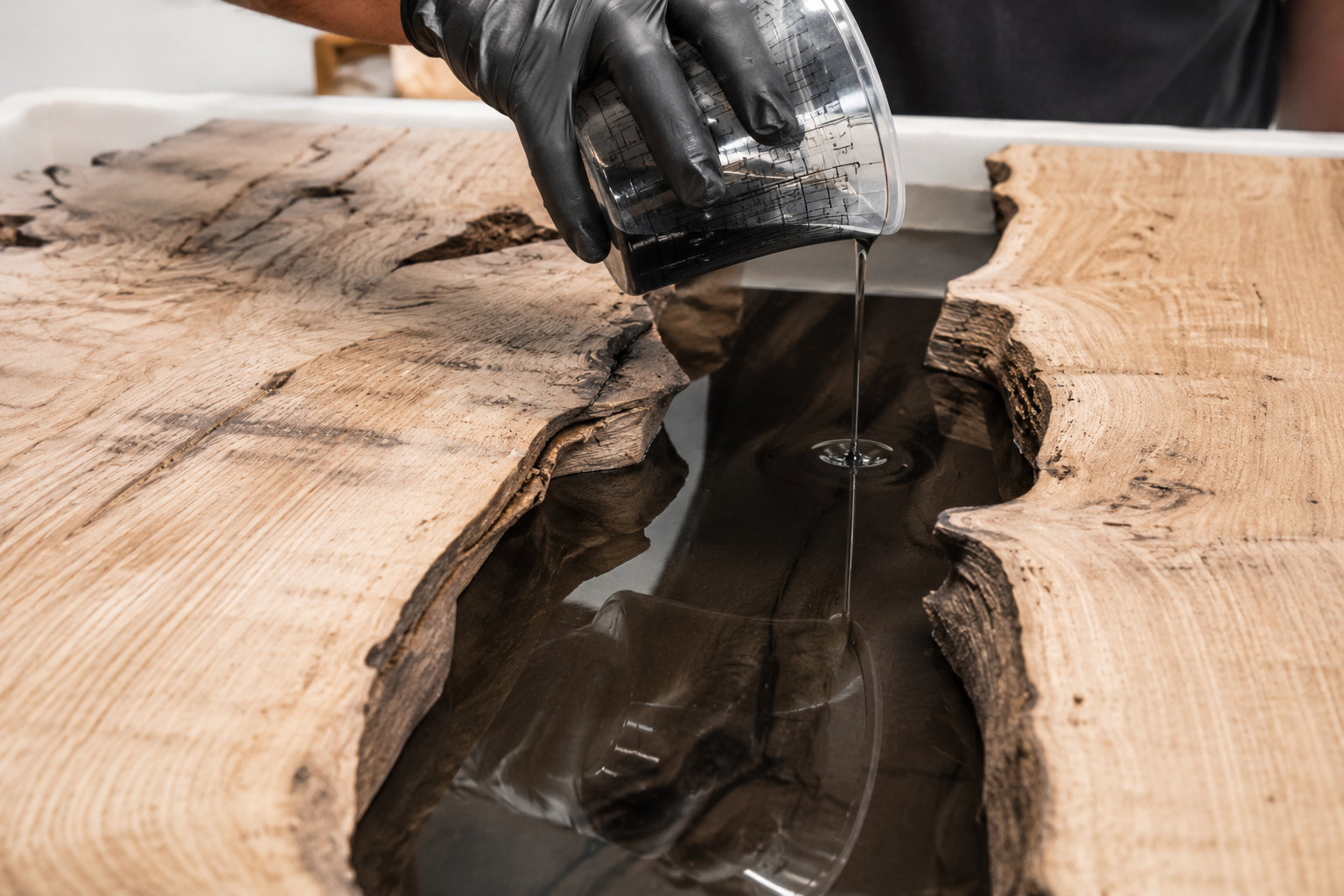
From the selection of the wood to the pouring of the resin, every stage helps create an unrepeatable product, capable of telling a story unlike any other.
The choice of wood: where everything begins
Every project starts with the selection of solid wood.
European walnut, oak, ash, olive wood, and other fine species are chosen individually according to their natural characteristics.
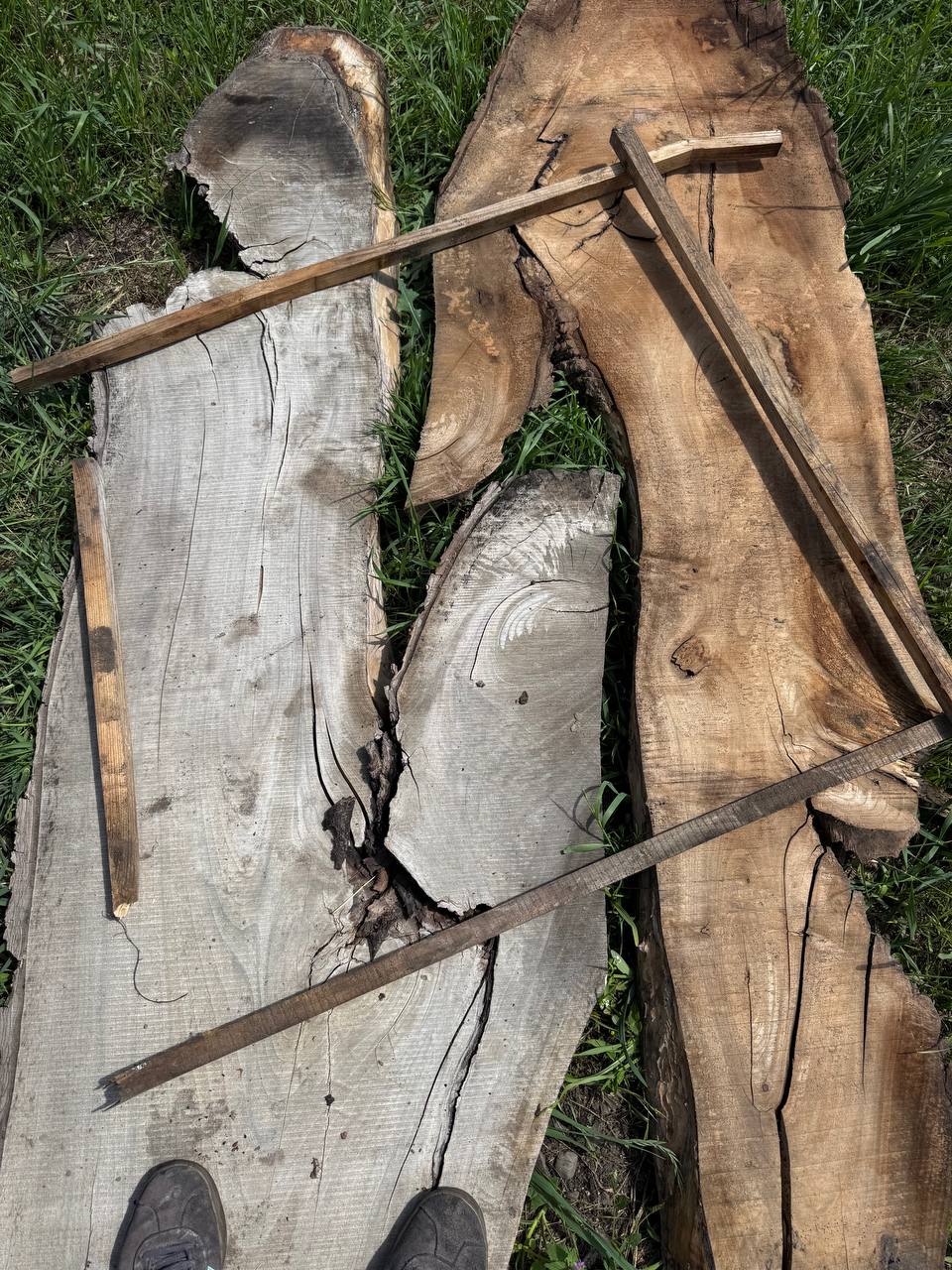
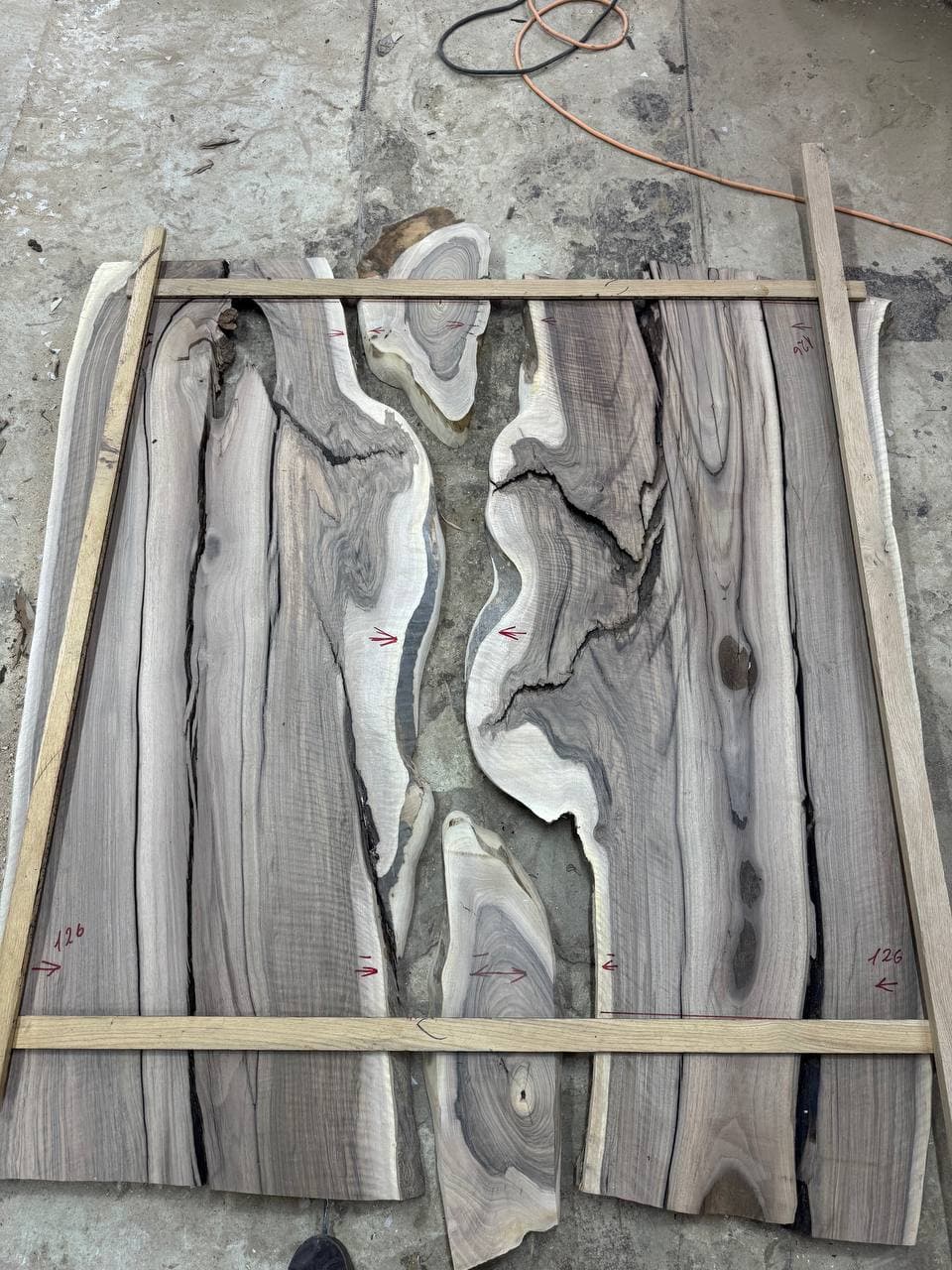
We do not limit ourselves to assessing the size or color of the wood; we carefully observe the grain, knots, nuances, and original shape of the slab.
What many might see as an imperfection, we regard as the true value of the material. A natural crack, a particularly pronounced knot, or an irregular edge tells the story of the tree and becomes a distinctive feature of the finished table.
For this reason, no two tables are identical. Each slab has a unique personality that is enhanced throughout the entire production process.
Drying: an essential stage
Before it can be worked, the wood must reach the correct moisture level.
The process begins with an initial natural drying phase, during which the slabs are left to season in the open air for a period that may range from 2 to 5 years, depending on the species, thickness, and characteristics of the wood. This stage allows the material to gradually lose much of the moisture contained within it.